

Insurance Claims Support for Boarding Up in Enfield (EN)
If you’ve had a break-in, storm damage, fire, flooding or an impact, dealing with the insurance side can feel like a second emergency. Alongside securing the property, you’re trying to keep everyone safe, stop further loss, and gather the right paperwork.
We provide boarding up in Enfield and across the EN postcodes, and we’ll support your insurance claim with clear documentation of what we did and why. We’re not loss adjusters and we can’t advise on policy wording—but we can make the “urgent securing works” part straightforward and properly evidenced.
Need urgent help first? Use our emergency boarding up service or Call 020 4634 5688.
What insurers usually expect after damage
Most UK property policies expect you to take reasonable steps to prevent further damage once it’s safe to do so. That’s often where boarding up sits—especially after smashed glazing, a forced door, or roof damage that leaves the building exposed to weather or intruders.
Typical insurer requests include:
- The date/time the incident happened (or was discovered)
- A crime reference number for burglary/vandalism (if police attended)
- Photos showing the damage and the secured state afterwards
- An invoice describing “temporary security” or “emergency make-safe works”
- Confirmation of any additional risks (e.g., property left vacant, shared access)
If you’re looking for background on methods and materials, see what boarding up is and how it works.
What we can provide for your claim (and what we can’t)
Insurance claims go smoother when the paperwork is clean and consistent. When we attend, we can provide:
What you’ll receive from us
- Itemised invoice describing the works carried out and materials used
- Work statement (what was damaged, what was secured, and why)
- Time-stamped photos of the openings boarded/secured (where practical and safe)
- Notes on any access constraints (rear access, alleyways, height work, shared entrances)
- Confirmation if a temporary steel door or security screens were installed
What’s outside our scope (being transparent)
- We’re not loss adjusters, surveyors, or legal advisers
- We don’t confirm whether your insurer will pay—coverage depends on your policy
- We don’t carry out full reinstatement (new windows/doors, glazing, joinery, decoration)
Our job is to secure and weatherproof the property, then leave you with evidence to support the claim
How the process works with insurers (step-by-step)
1) You call us and we ask a few practical questions
To avoid wasted time on arrival, we’ll ask things like:
- What’s been damaged—window, door, shopfront or roof/skylight
- Is the property occupied, vacant, or a commercial unit
- Are police/fire service still on scene, and is it safe to attend
- Whether you need short-term boarding or a medium-term security solution
If it’s urgent, start with emergency boarding up and we’ll prioritise making the site safe.
2) We secure the opening using the right method
We choose the approach based on the opening, the substrate, and how long it needs to stay secure:
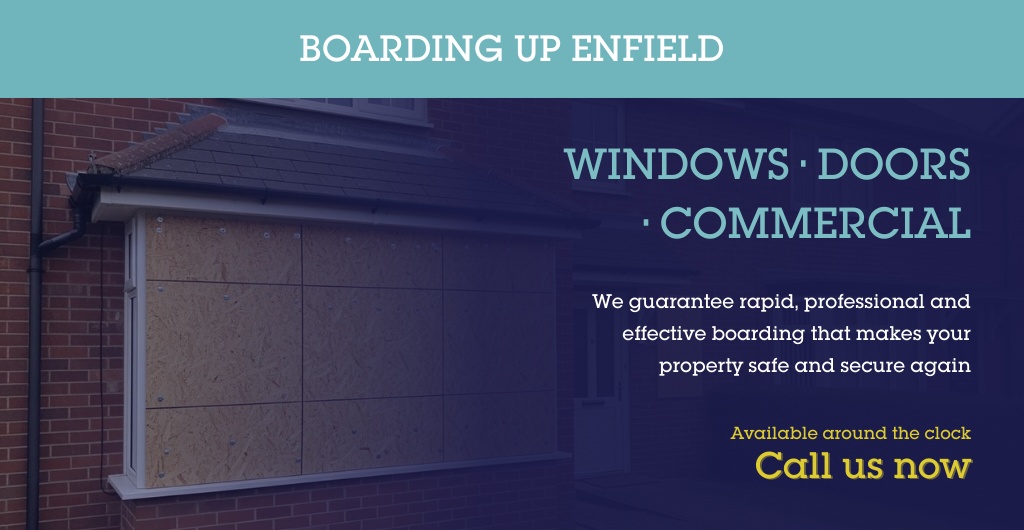
- Windows: typically 18mm exterior-grade plywood for larger openings; 12mm OSB can be suitable for smaller panes in lower-risk areas
See window boarding in Enfield. - Doors / forced entries: boarding may be appropriate short-term, but for repeated access (or where the original door is destroyed) a temporary steel door is often more secure.
- Shopfronts: larger spans and high footfall may require heavier-duty boarding and anti-tamper fixings
See shopfront boarding. - Rooflights / skylights: overhead risks, safe access, and weatherproofing are key
See roof boarding.
We use anti-tamper fixings where needed, because insurers (and common sense) don’t like “easy to remove” boards on unattended properties.
3) We document what we’ve done
Where safe to do so, we’ll take photos showing:
- The damaged opening(s)
- The fixing method (especially where anti-tamper fixings are used)
- The secured result from outside and, if relevant, inside
If the frame is too damaged for non-destructive fixing methods, we’ll explain the options before proceeding.
4) You submit the paperwork to your insurer/agent
Most customers submit:
- Our invoice and work statement
- Photos (yours and ours)
- Police reference number (if applicable)
If you’re a landlord or managing agent, you may also want a short summary for your tenant file—see vacant property boarding and commercial boarding up for relevant considerations.
Common claim scenarios we deal with in Enfield (EN)
Enfield’s housing stock and commercial mix means we see a predictable range of callouts—from period homes with timber sashes to modern shopfront glazing.
Burglary and forced entry
After a break-in, it’s often the door edge, frame, or lock area that fails, plus side panels or nearby glazing. We secure the opening and reduce the chance of repeat entry.
Related guidance: boarding up after burglary.
Vandalism and smashed glazing
In busy areas—near town centres, stations, and parades—shopfront glazing and ground-floor windows are vulnerable. Boarding up prevents further damage and keeps the premises compliant while you arrange replacement glazing.
Related guidance: vandalism repair and boarding.
Storm damage (including dislodged panels and broken windows)
High winds can crack panes, dislodge weak frames, or bring down debris. Temporary boarding is about weatherproofing and safety, not just security.
Related guidance: storm damage boarding up.
Fire damage (post-fire securing)
After the fire service has finished, properties are often left open via broken doors/windows, damaged frames, or removed panels for ventilation. We secure the site. Smoke/odour remediation is outside our scope, but we can help you prevent further loss.
Related guidance: fire damage securing.
Flood damage and swollen frames
Flood water can swell timber and distort frames so windows/doors won’t close properly. Sometimes the safest route is to secure the opening until joinery or glazing can be properly repaired.
Related guidance: flood damage boarding.
Vehicle impact or accidental damage
A car into a front wall, a delivery impact to a shutter line, or accidental breakage can leave a property exposed. We’ll secure what we can, and flag if a structural concern needs specialist attention.
Related guidance: accident and impact damage.
Tips to protect your claim (practical, not legal advice)
These steps often help prevent delays:
- Report incidents promptly (especially burglary/vandalism) and keep your reference number.
- Take photos before any clean-up if it’s safe—capture the wider scene as well as close-ups.
- Don’t throw away broken locks/handles immediately if they’re part of the evidence—bag and label them.
- If you’re worried about costs, ask what documentation your insurer prefers—but don’t delay securing the property if it’s exposed.
- If the property will be unoccupied, tell the insurer—many policies have unoccupancy conditions.
If you want a transparent overview of cost drivers for emergency call-outs and planned works, see boarding up pricing.
Working with landlords, agents and facilities managers
We regularly deal with:
- Landlords managing urgent security while tenants are displaced
- Letting agents needing fast securing between tenancies
- Facilities managers securing commercial premises out of hours
We can provide clear job notes and documentation suitable for handover to insurers or property management files. For background by property type, see:
FAQs about insurance claims and boarding up in Enfield
Will my insurer pay for boarding up?
Many policies cover “reasonable emergency make-safe” or “temporary repairs”, but it depends on your cover, excess, and the circumstances. We’ll provide documentation insurers typically ask for, but we can’t confirm coverage. If you need emergency securing, use 24 hour emergency boarding up in Enfield first and sort the claim paperwork afterwards.
What should the invoice say for an insurance claim?
Insurers generally want a clear description: what was damaged, what was done to secure it, materials used, and the date/time attended. Our invoices are itemised and supported by a work statement and photos where possible.
Do I need a police crime reference number?
For burglary or criminal damage it’s commonly requested. If you don’t have one yet, we can still secure the property, but you should report the incident and keep the reference for your claim. Guidance: secure property after burglary and post-vandalism boarding.
Can you secure a property if the door frame is badly damaged?
Often yes—either by boarding (short-term) or by installing a temporary steel door if the opening is compromised and the property needs ongoing access. If the frame is unstable or there’s structural movement, we’ll explain the limitations and options before proceeding.
I’m in the EN postcode area—do you cover my location?
Yes, we cover Enfield and the surrounding EN districts. You can check areas we cover to find your nearest local page.
Helpful Links
- Emergency boarding up
- Boarding up pricing
- Window boarding in Enfield
- Door boarding and temporary steel doors
- Storm damage boarding
- Areas we cover
Next step: secure the property, then deal with the paperwork
If your property is exposed, the priority is to make it safe and prevent further loss. We’ll then give you the documentation needed to support your insurer submission.
Ready to get started? Call 020 4634 5688 or email us for a free, no-obligation quote.
