

What Is Boarding Up in Enfield? A Practical Guide to Securing Damaged Property
Boarding up is the process of securing broken, vulnerable, or exposed openings in a property—most commonly windows, doors and shopfront glazing—using robust sheet materials and tamper-resistant fixings. In Enfield and across the EN postcodes, it’s often needed after a burglary, vandalism, storm damage, fire, or an accident where glass or frames have failed.
The aim is straightforward: keep the property safe, weather-resistant and secure until permanent repairs (like new glazing or door replacement) can be arranged.
If you need urgent help, see emergency boarding up or call 020 4634 5688.
What boarding up does (and what it doesn’t)
Boarding up is a temporary security measure, but “temporary” can mean anything from a single night to a few weeks depending on your insurer, glazing lead times and the level of damage.
Boarding up helps to:
- Prevent unauthorised access after a break-in or when a window/door has failed
- Reduce further damage from wind and rain (especially important after storm damage)
- Deter opportunistic crime on unattended properties (common with voids and probate homes)
- Make the site safer for residents, neighbours, staff and passers-by
Boarding up does not:
- Replace broken glazing permanently (that’s for a glazier)
- Repair fire/smoke damage or remediate odours (we’ll secure the building after fire—see fire damage securing)
- Guarantee a property is “alarm-proof” or risk-free—security is layered, and we’ll advise what’s realistic for your building
If something is structurally unsafe (for example, severe frame failure or impact damage to masonry), we’ll explain what we can and can’t fix safely before proceeding.
When you might need boarding up in Enfield
In the EN area, we’re regularly called out to secure properties in busy town-centre locations and quieter residential streets alike—everything from shopfront glass to rear kitchen windows.
Common situations include:
- Burglary / attempted break-in: forced doors, smashed panes, damaged locks
See: after a burglary - Vandalism: stone damage, cracked glazing, repeated attacks on the same frontage
See: vandalism repairs - Storm damage: blown-in windows, dislodged panels, tree/debris impact
See: storm damage boarding - Fire damage: windows failing due to heat, doors removed by emergency services, unsecured voids
See: post-fire securing - Accidental impact: vehicle strikes to low-level glazing, collisions with shopfronts, accidental breakage
See: accident damage securing
In Enfield specifically, we often see urgent requests where properties sit close to main routes (like the A10 corridor) or near retail parades where damaged glass draws attention quickly. In residential areas—Victorian terraces, 1930s semis, and ex-local flats—rear access points and alleyways can make quick securing especially important.
How boarding up works: the on-site process
Every job is slightly different, but a professional boarding-up visit typically follows a clear, practical sequence.
1) Safety check and assessment
We first check:
- Whether there are hazards such as hanging glass, unstable frames, or overhead risk (e.g., skylights)
- The size, shape and condition of the opening (window reveals, door frame integrity, shopfront mullions)
- Access constraints (upper floors, rear gardens, commercial shutters, communal entries)
If the frame is too damaged for non-destructive methods, we’ll explain the options and the impact on later repairs before we proceed.
2) Choosing the right materials
Most boarding up uses sheet material cut to fit and fixed securely.
Common options include:
- 18mm exterior-grade plywood for strong, durable protection (typical for larger openings and ground-floor risk points)
- 12mm OSB (or similar) for smaller or lower-risk apertures where appropriate
- Temporary steel doors for damaged doorways where you need secure access control, not just coverage
See: door boarding and securing
Material choice depends on exposure, risk level, whether the building will be occupied, and how long the board is likely to remain in place.
3) Fixing method and tamper resistance
How we fix boards matters just as much as the board itself. Where possible, we use methods designed to resist removal from outside, such as:
- Anti-tamper fixings
- Fixing into sound structural timber or masonry
- Internal bracing techniques (when access allows) to reduce external fixings
We aim to keep the property secure while also avoiding unnecessary damage—particularly important if you’re planning a like-for-like window replacement and want the reveal kept intact.
4) Weatherproofing and finishing
Boarding up isn’t just security—it’s also about limiting weather ingress. Depending on the opening, we may:
- Overlap boards to reduce water penetration
- Address drafts and exposed edges where practical
- Advise if additional steps are needed (for example, if the surrounding frame has failed and wind-driven rain is likely)
For overhead openings, we take a different approach—see roof boarding for skylights and roof-level damage.
5) Documentation for your records/insurer
After the work, you should expect clear documentation. We can provide:
- Time-stamped photos of the secured openings
- An itemised invoice and work statement describing the method and materials used
We’re not loss adjusters, but this sort of evidence is commonly requested when you’re dealing with a claim. More guidance is on our insurance claims page.
Different types of boarding up (windows, doors, shopfronts, roofs)
Boarding up isn’t one-size-fits-all. The property type and opening type changes the method.
Window boarding
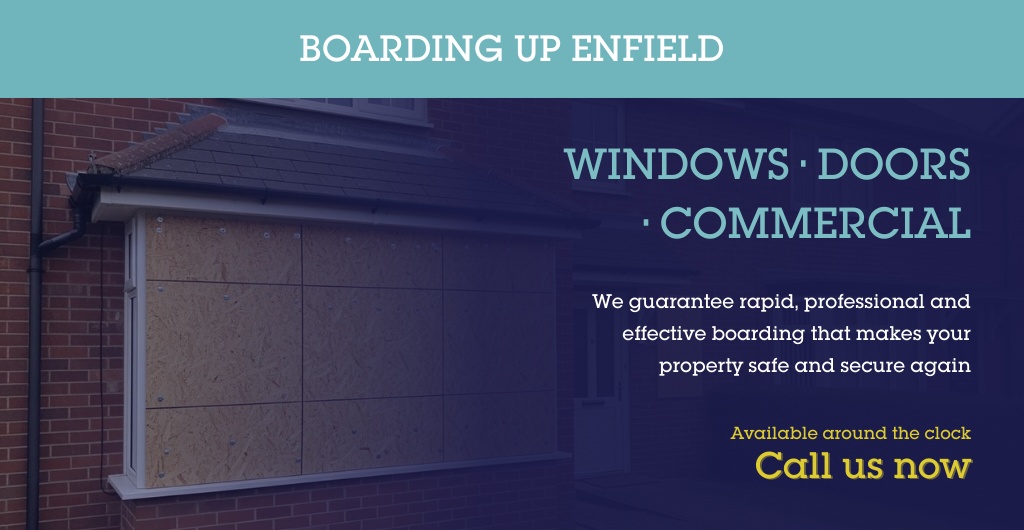
Typically used for broken panes, failed double-glazed units, or vulnerable windows after a burglary. We cut boards to size, secure them with suitable fixings, and aim to protect both the opening and the surrounding frame.
Learn more about window boarding in Enfield.
Door boarding and temporary steel doors
If a door has been forced or the frame is compromised, you may need more than a sheet over the opening—especially for occupied properties or sites that need controlled access.
Learn more about door boarding in Enfield.
Shopfront boarding
Retail and commercial glazing is often larger and more exposed, with higher footfall and more urgency around safety and reputational risk. We can board up shopfronts to secure the premises and reduce the chance of repeat incidents.
Learn more about shopfront boarding.
Roof and skylight boarding
Roof-level openings and skylights bring extra risk: working at height, weather exposure, and the potential for water to spread through ceilings and electrics.
Learn more about roof boarding.
Boarding up for different property types
Your plan should reflect whether the building is lived in, trading, or empty.
- Homes and flats: We prioritise safety, privacy and practical access for residents. See residential boarding up.
- Shops, offices and sites: We focus on frontage security, safe public-facing protection and site documentation. See commercial boarding up.
- Vacant properties: Longer-term risk management may call for stronger, more tamper-resistant solutions, depending on exposure and duration. See vacant property boarding.
How long does boarding up last?
Boarding up is intended to be temporary, but it should be installed to remain secure for as long as required. How long it stays in place depends on:
- Lead times for glazing/doors
- Insurer approvals
- Whether the property is occupied
- Risk level of the location
If you expect a longer period before reinstatement, tell us at the start so we can advise the most suitable approach.
What to do before we arrive (if it’s safe)
If you’ve had a break-in or damage and you’re waiting for boarding up, these steps often help:
- Call the police if there’s been a crime, and keep the crime reference number.
- Take photos of damage if it’s safe and you can do so without touching broken glass.
- Don’t clear up everything immediately if you need to evidence forced entry for insurance—secure the scene first.
- Keep people away from the damaged area, especially children and pets.
- Contact your insurer early if you’re planning to claim, and ask what documentation they need.
For urgent securing, use our 24-hour emergency boarding up in Enfield page.
FAQs about boarding up in Enfield
Is boarding up covered by insurance in Enfield?
Often it can be, especially when boarding up is needed to prevent further damage after a burglary, vandalism, storm, or impact. Cover depends on your policy and circumstances. We can supply photos and an invoice to support your claim—see insurance claims help.
How much does boarding up cost in Enfield?
Costs vary based on opening size, material choice (plywood/OSB vs steel options), access (upper floors, rear access), and the number of openings. We’re transparent about what drives price—see boarding up pricing.
Can you board up a shopfront the same day?
In many cases, yes, subject to availability and the specifics of the damage. For urgent commercial issues, use emergency boarding up and we’ll prioritise where there’s a clear security risk.
Will boarding up damage my window frame or brickwork?
We aim for secure fixing while minimising unnecessary damage. The best method depends on the condition of the frame and surrounding substrate. If the area is too compromised for a “clean” fix, we’ll explain the trade-offs before proceeding.
Does Enfield Council provide boarding up after damage?
Council involvement varies and is usually limited to specific scenarios. In most cases, responsibility sits with the property owner, landlord, managing agent, or insurer. If you’re unsure, we can advise on practical next steps, but we can’t provide legal guidance.
Ready for next steps?
If you’re comparing options, start with our overview of boarding up services in Enfield and the areas we cover. If something’s happened and you need securing urgently, use our emergency page for the quickest route to help.
Ready to get started? Call 020 4634 5688 or email us for a free, no-obligation quote.
